
End of Tenancy Clearance Liverpool: A Landlord’s Compliance Checklist
Binning a tenant’s leftover furniture the day they leave could cost you more than the clear-out itself. UK law gives former tenants a real right to claim damages if their belongings are disposed of the wrong way. It’s exactly why end of tenancy clearance Liverpool landlords need a proper process, not just a skip.
The short version: you can’t legally dispose of anything left behind straight away. You need to make reasonable efforts to contact the tenant first, and give them a fair chance to collect it. Skip that step, and you’re personally exposed to a claim.
This checklist covers exactly what Liverpool landlords need to do, in order, from first contact through to professional clearance and disposal. It also covers real local costs, so you know what to budget before you book anyone.
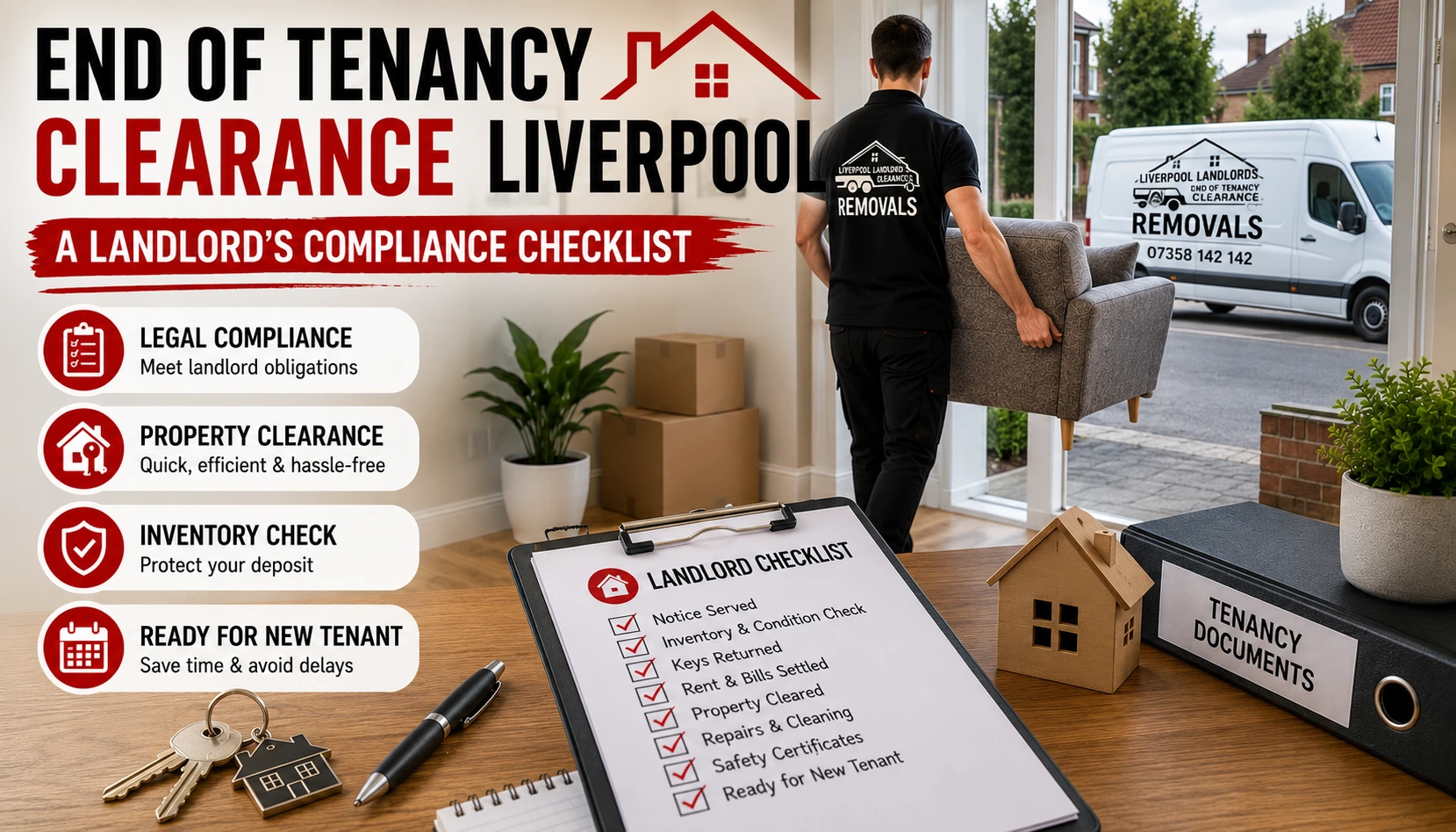
What Counts as End of Tenancy Clearance in Liverpool?
At South Liverpool Removals, clearance jobs make up a large share of our landlord bookings. Clearance means removing furniture, rubbish, and any belongings left behind after a tenancy ends. It’s a distinct job from cleaning.
A clean makes the property presentable. A clearance empties it out first, which usually has to happen before any cleaning team can even get started properly.
The Legal Risk Most Landlords Miss
Here’s the part that catches landlords out. If a tenant leaves belongings behind, you don’t automatically have the right to dispose of them.
Under the Torts (Interference with Goods) Act 1977, a landlord holding a tenant’s abandoned items becomes an “involuntary bailee.” That’s a legal term. It means you’re responsible for keeping those items safe until the tenant has had a fair chance to collect them. It’s the single most important legal fact behind any end of tenancy clearance Liverpool decision.
Dispose of items too early, or without proper notice, and a former tenant can claim damages. Those damages equal the current value of what you disposed of. This applies whether the leftover items are worth £20 or £2,000.
End of Tenancy Clearance Liverpool: A Step-by-Step Checklist
This is the order end of tenancy clearance Liverpool landlords should follow to stay compliant and get the property cleared properly.
Step 1: Contact the Tenant First
Before touching anything, try to reach the tenant using the contact details on file. Email, phone, and a letter to their new address, if you have one, all count as reasonable attempts.
Step 2: Serve Formal Notice If Needed
If contact fails, or the tenant doesn’t respond, a formal notice under the Torts Act is the next step. It gives them a specified period, commonly 14 days, to collect their belongings before you can act.
Step 3: Document Everything Before Clearance
Photograph every room and every item left behind before anything is moved. This protects you if a dispute arises later about what was actually left and its condition.
Step 4: Book Professional Clearance
Once notice periods have passed, our Property Clearances Liverpool service handles the full clear-out, from furniture to general household waste, in a single visit.
Step 5: Store or Dispose Correctly
Items of genuine value should be stored for a reasonable period, not disposed of immediately. Low-value general waste can go straight to disposal once your notice period has passed, using our Rubbish Removal Liverpool service.
How Much Does End of Tenancy Clearance Cost in Liverpool?
Pricing depends on volume and property size. A single room clearance typically starts from around £120-£180. A full property clearance, covering a two or three-bedroom house left with furniture and belongings, usually runs £250-£450.
If you’re weighing up a skip against a professional clearance for the waste side, we’ve covered the real cost difference. See our guide comparing skip hire and rubbish removal in Liverpool. For most landlords managing an end of tenancy clearance Liverpool job, one clearance booking is simpler. It avoids managing a skip permit on top of an already time-pressured re-let.
Clearance vs Cleaning: Why Landlords Need Both
Clearance and cleaning are often confused, but they’re separate jobs with separate purposes. Clearance removes everything left behind. Cleaning makes the empty property presentable for new tenants or an inventory check.
Most letting agents expect both to be done before a new tenancy starts. Booking clearance first means your cleaning team isn’t working around furniture and bags of rubbish, which usually keeps their costs down too.
GET YOUR FREE QUOTE
Book End of Tenancy Clearance in Liverpool
Getting end of tenancy clearance right in Liverpool means protecting yourself legally, not just clearing the property quickly. Contact the tenant first, document what’s left, serve notice if needed, and only then book removal.
Once you’re ready, professional clearance is usually faster and less stressful than doing it yourself between other landlord responsibilities. That’s the real value of a proper end of tenancy clearance Liverpool process. Fewer disputes, faster re-lets, and no exposure to a claim you didn’t need to risk.
Get in touch through our Contact Us page and tell us what’s left in the property. We’ll give you a straightforward quote and a realistic timeline to get it re-let.
Faq
Frequently Asked Questions
Have a question about our End of Tenancy Clearance Liverpool? Find quick answers below, or call us on +44 7842 927257 for a same-day response.
There's no fixed national number. A formal notice under the Torts Act typically gives a tenant around 14 days to collect their belongings after being notified. Courts have upheld shorter periods, around 7 days, in cases involving low-value items the tenant had clearly chosen not to remove. When in doubt, document your attempts to contact the tenant and allow a reasonable window before proceeding with end of tenancy clearance Liverpool work.
Not immediately, no. Doing so without following the correct notice process under the Torts (Interference with Goods) Act 1977 leaves you open to a damages claim. This applies even for items that look like rubbish to you. Photograph everything, attempt to contact the tenant, and serve formal notice before disposing of anything, particularly larger or higher-value items.
A single room clearance typically costs £120-£180, while a full two or three-bedroom property clearance usually runs £250-£450, depending on volume. Most end of tenancy clearance Liverpool pricing reflects what's actually being removed rather than a flat rate. A property left with just a few bags of rubbish will cost considerably less than one left fully furnished.
Items of genuine value should be stored for a reasonable period after your notice period ends. Disposing of anything with resale or sentimental value too early increases your legal risk. Low-value general waste, like empty boxes or damaged items, can typically be disposed of once the notice period has passed without the same storage obligation.
A clearance company handles the physical removal of items, not the legal notice itself, which should be prepared correctly to protect you from a claim. Many landlords use a solicitor or landlord association template for the notice. Once the notice period has expired and items are legally ready for removal, they book a clearance company like ours.
Most clearance jobs can be booked within a few days of your notice period ending, which helps minimise void periods between tenancies. Same-week bookings are often possible depending on availability. It's worth calling directly once you know your exact clearance date, rather than waiting until the property sits empty and costing you rent.
South Liverpool Removals is a trusted local company providing house removals, man with a van services, rubbish removal and property clearances across Liverpool and Merseyside.
Quick Link
Our Services
Contact
- +44 7842 927257
- info@southliverpoolremovals.co.uk
- Liverpool, United Kingdom
- Mon (09:00 – 19:00) Tue (09:00 – 19:30) Wed to Fri (09:00 – 19:00) Sat to Sun (Closed)
2026 Copyright © Design By Aflah Tech